

THE GRID JOURNAL
There is always more happening than what you see on track. The Grid Journal is where we get into everything from Partnerships, politics, personalities and the deeper currents shaping the world of Formula 1.
QATAR’S FORMULA 1 STRATEGY
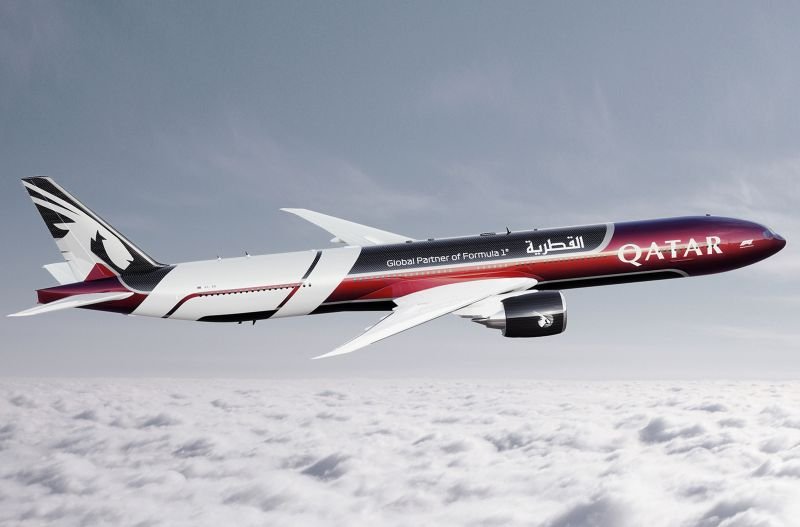
Qatar Airways flight mid-air sporting its special F1 livery. (Photo credit: Qatar Airways)
Most Formula 1 sponsorships are designed to increase brand awareness. A logo appears on the circuit, a hospitality programme is activated, and the partnership delivers global visibility throughout the season.
Qatar’s approach is fundamentally different.
The more you study the relationship between Formula 1 and Qatar Airways, the clearer it becomes that it is a country engineering an entire ecosystem around Formula 1, where aviation, tourism, hospitality and national branding reinforce one another. The airline is simply the most visible piece of a much larger strategy.
The partnership appears relatively straightforward. Qatar Airways became Formula 1’s Official Airline and Global Partner through 2027. But the real story lies in how that agreement has been executed. Rather than relying solely on the prestige of a global partnership, Qatar Airways secured title sponsorship rights for four Grands Prix: Austria, Great Britain, Azerbaijan and its home race in Lusail. Together, those races create a strategic corridor stretching from Europe to the Gulf, positioning Qatar Airways as the airline connecting two of Formula 1’s most commercially significant regions.
The strategy becomes even more compelling when you look beyond branding and into the customer journey. Instead of simply advertising flights, Qatar Airways built an integrated travel product around Formula 1 itself. Fans can book discounted flights to Grands Prix across the calendar, linked directly to the airline’s loyalty programme and distributed through a network serving more than 170 destinations. Rather than sponsoring the sport, the airline has embedded Formula 1 into its own commercial offering.
That level of vertical integration is even more evident at the Qatar Grand Prix. Flights, hotels, grandstand tickets and Paddock Club hospitality are bundled into a single experience, allowing Qatar Airways to capture value across multiple stages of the visitor journey. The partnership extends far beyond transporting fans to a race weekend; it monetises nearly every touchpoint surrounding the event.
Lusail itself illustrates how closely aligned the strategy is with Qatar’s national ambitions. The government has secured the Formula 1 Grand Prix through a long-term agreement, transforming the event into a recurring tourism asset rather than a standalone sporting occasion. Once that foundation is in place, Qatar Airways amplifies the impact by bringing visitors into the country, supporting hospitality demand and encouraging broader tourism spending. One race generates multiple revenue streams while reinforcing the country’s international brand.
Execution is another area where Qatar has distinguished itself. The partnership is activated globally rather than locally. Through Right Formula, the agency responsible for delivering the programme, Qatar Airways has maintained activations at more than ten Grands Prix in a single season. That consistency ensures the partnership is experienced by fans across the championship rather than concentrated around a single home event. Formula 1 is to them a year-round marketing platform rather than an annual sponsorship.
Viewed as a whole, a clear pattern emerges. Qatar invests in long-term sporting assets, aligns them with its national airline, connects them to inbound tourism, and amplifies everything through global partnerships. Each element strengthens the others, creating a system that is significantly more valuable than any individual sponsorship agreement could achieve on its own. And this doesn’t even account for Qatar’s growing involvement in the competitive side of Formula 1 through broader investments across the sport.
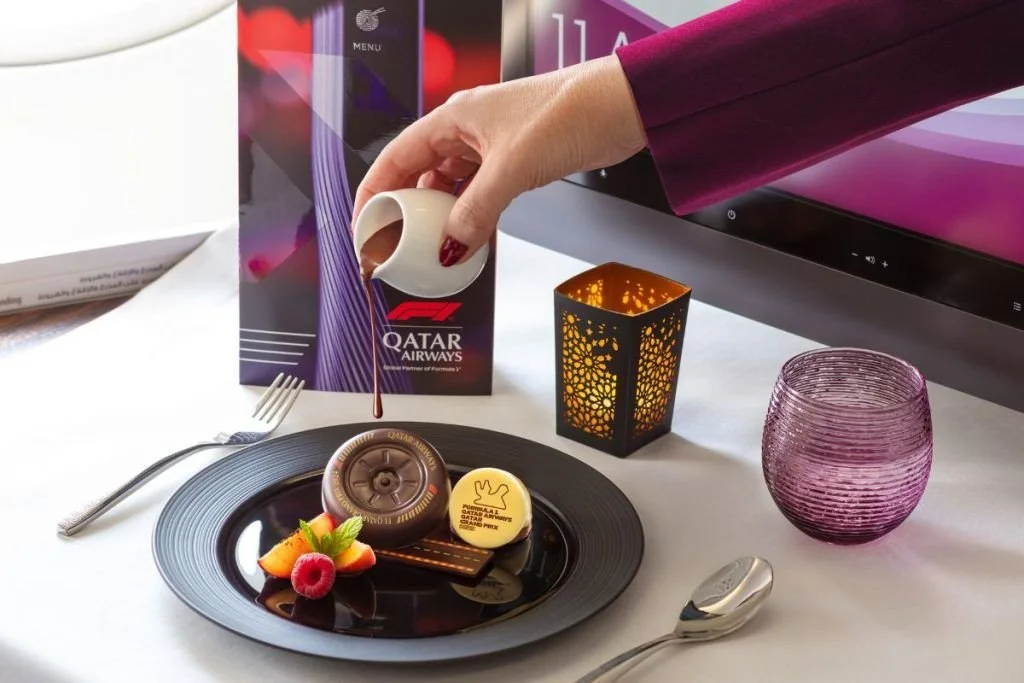
An in-flight dining spread with desserts made to honour Qatar Airways’ partnership with Formula 1 (Photo credit: Qatar Airways)
For anyone working in motorsport marketing or sports sponsorship, this is one of the most compelling case studies currently unfolding in Formula 1. It demonstrates what becomes possible when a country stops viewing sponsorship as a marketing expense and starts treating it as an instrument of economic development and nation branding.
Qatar essentially attached its name to Formula 1 and integrated it into its national strategy.